
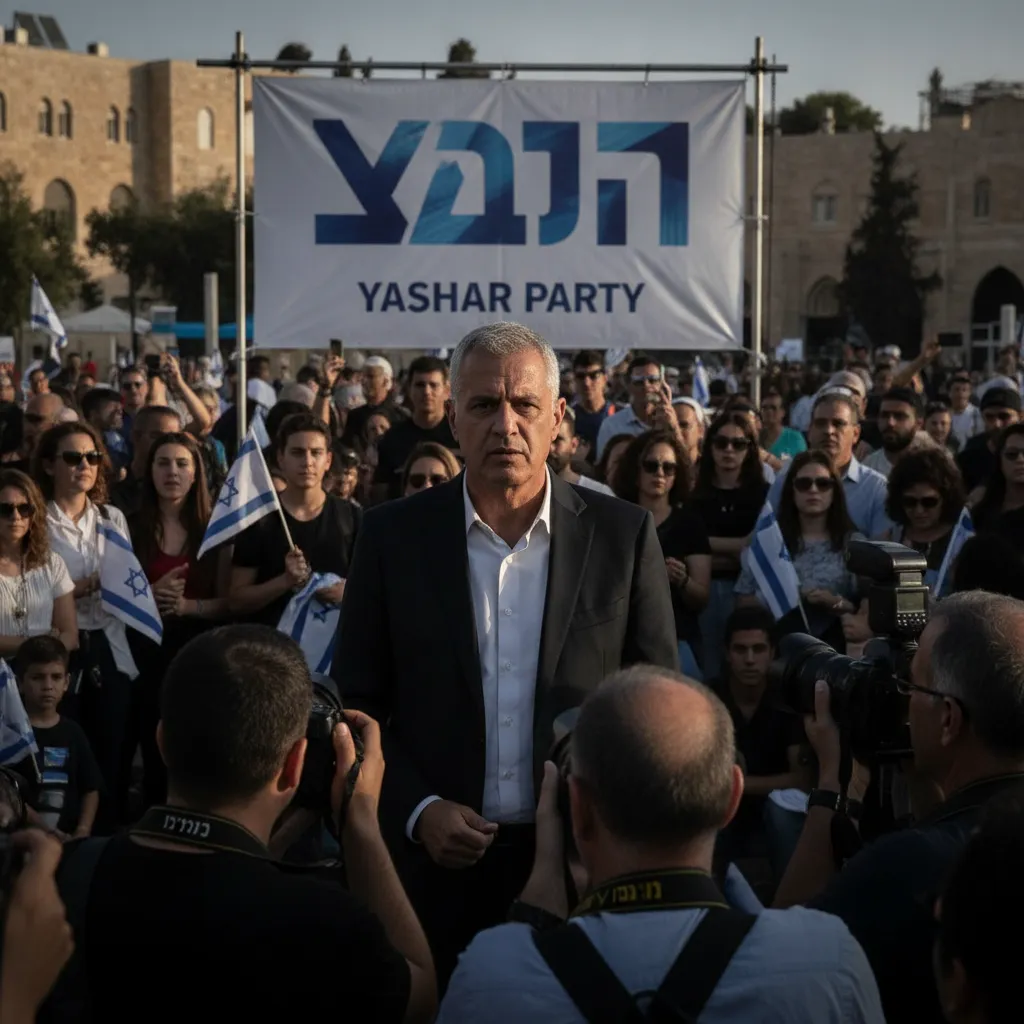
As Israel prepares for its first election since the devastating Hamas attacks three years ago, former military chief Gadi Eisenkot has emerged as a formidable challenger to Prime Minister Benjamin Netanyahu. Leading the newly formed Yashar party, which translates to straight or honest, Eisenkot positions himself as a stark personality contrast to the flamboyant and embattled Netanyahu. While the current prime minister continues to battle corruption charges and faces widespread blame for security lapses, Eisenkot relies on a reserved, austere persona and deep military roots that resonate with a public seeking stability over political spectacle.

Despite offering a break from Netanyahu’s specific brand of leadership and his controversial far right allies, Eisenkot is hardly a moderate on security matters. He remains a staunch hawk who opposes Palestinian statehood and insists that Hamas’ military wing must be completely dismantled. His campaign leans heavily on his history as a commander, specifically referencing the Dahiyeh doctrine of using disproportionate force against enemy strongholds. This hardline stance ensures he appeals to voters whose security concerns have only intensified since October 7, while his own personal tragedy, having lost a son and two nephews in Gaza, adds a layer of perceived authenticity to his candidacy.
Eisenkot’s potential rise would also mark a historic shift in Israeli demographics, as the son of Moroccan immigrants, he would be the first prime minister from the Mizrahi community. By appealing to this traditionally influential voting bloc, he challenges Netanyahu’s hold on a key constituency. While he supports legal Jewish settlements in the West Bank and seeks to prevent Iran from obtaining nuclear weapons through force or diplomacy, he has distanced himself from the lawless settler violence championed by some of Netanyahu’s coalition partners, arguing instead for actions governed by national interest and legality.
The friction between the two men became public when Eisenkot resigned from Netanyahu’s war cabinet after eight months. He has since criticized the prime minister for failing to achieve total victory within the promised timeframe, claiming that beyond the release of hostages, few strategic goals have been met. As opinion polls currently show Yashar leading Likud, Israel finds itself at a crossroads where voters may choose between two different versions of strength: one rooted in seasoned political survivalism and another born from lifelong military command.
